Search · AI · Prototype
The best listing for every search, explained by AI
A custom reasoning engine reviews the top results for a search, picks the one listing a buyer can trust fastest, and makes the case for it.
The idea
Search ranks for relevance and price, but the best item to feature is the one a buyer can trust fastest: the clearest value, the most reliable seller, the most honest condition.
The reasoning engine
For each search, a custom LLM reasoning engine weighs up to 15 candidates against seven confidence dimensions and selects exactly one. The winner has to be clearly ahead on at least one of them. If none is, the card doesn’t appear: one confident pick or nothing.
- 1Price advantage: better value than comparable items in the results, not simply the cheapest.
- 2Brand confidence: a brand the buyer trusts without more research.
- 3Seller trust: strong feedback and track record. A Top Rated Seller beats an unknown one with a lower price.
- 4Condition and transparency: certified condition, and a clear account of what “used” or “refurbished” means for this item.
- 5Scarcity and demand: genuinely limited supply or strong demand, never manufactured urgency.
- 6Fit and compatibility: the closest match to what the buyer asked for, with the fewest open questions.
- 7Overall confidence: the safest choice across everything, used only when no single strength stands out.
The case for the pick
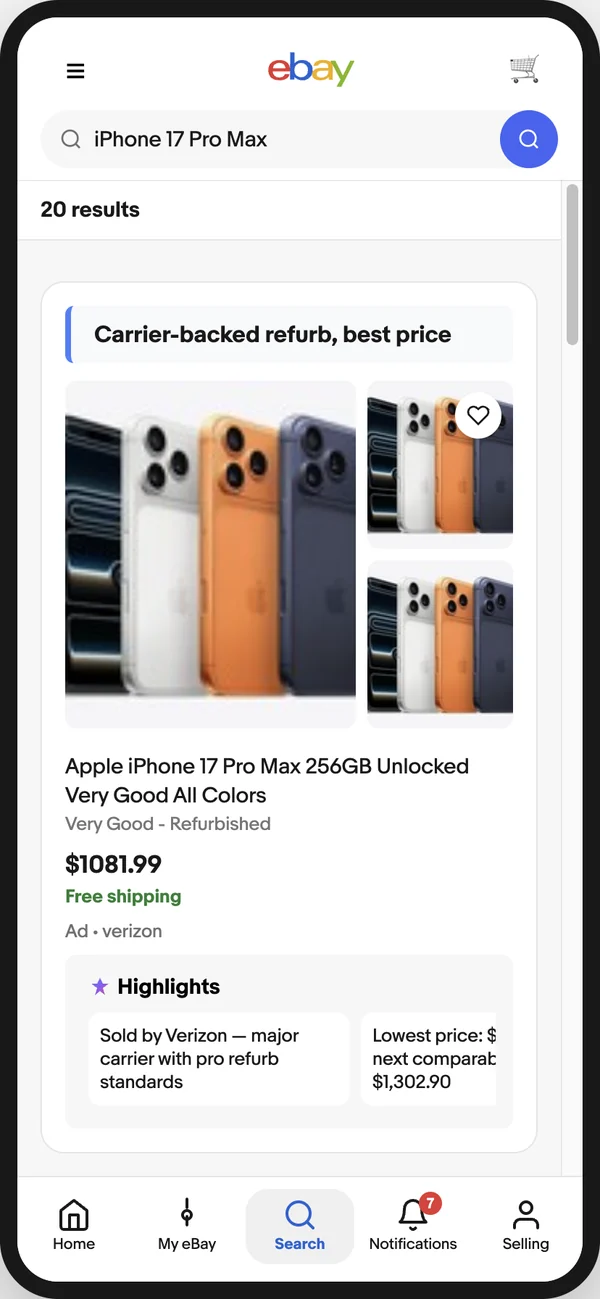
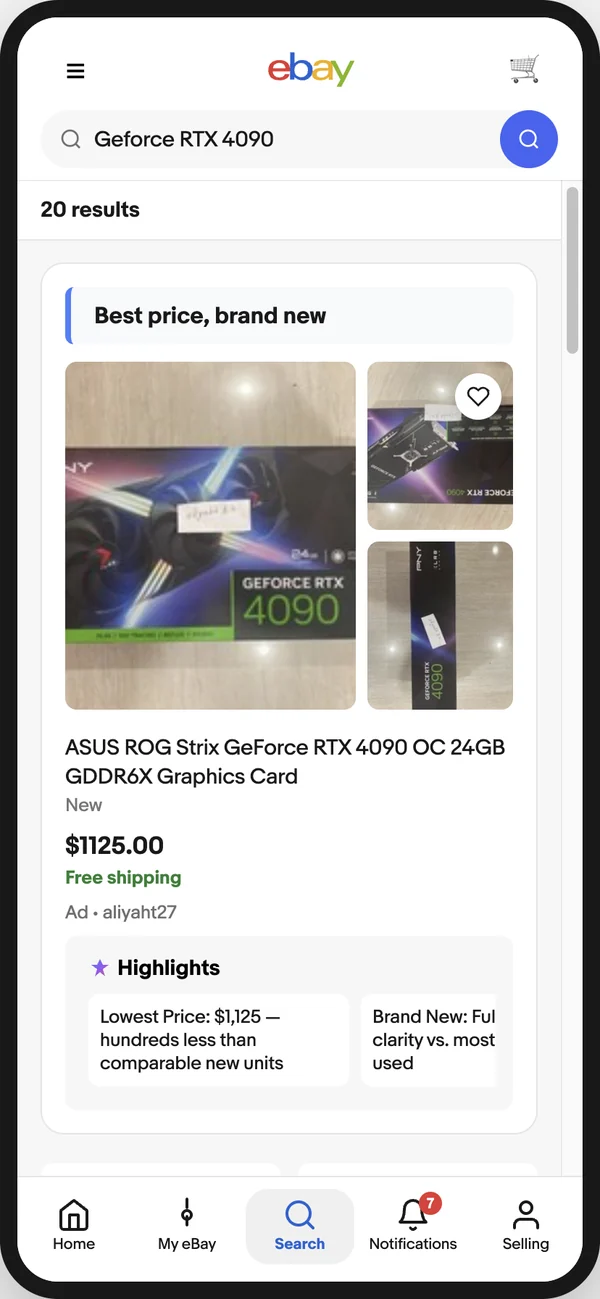
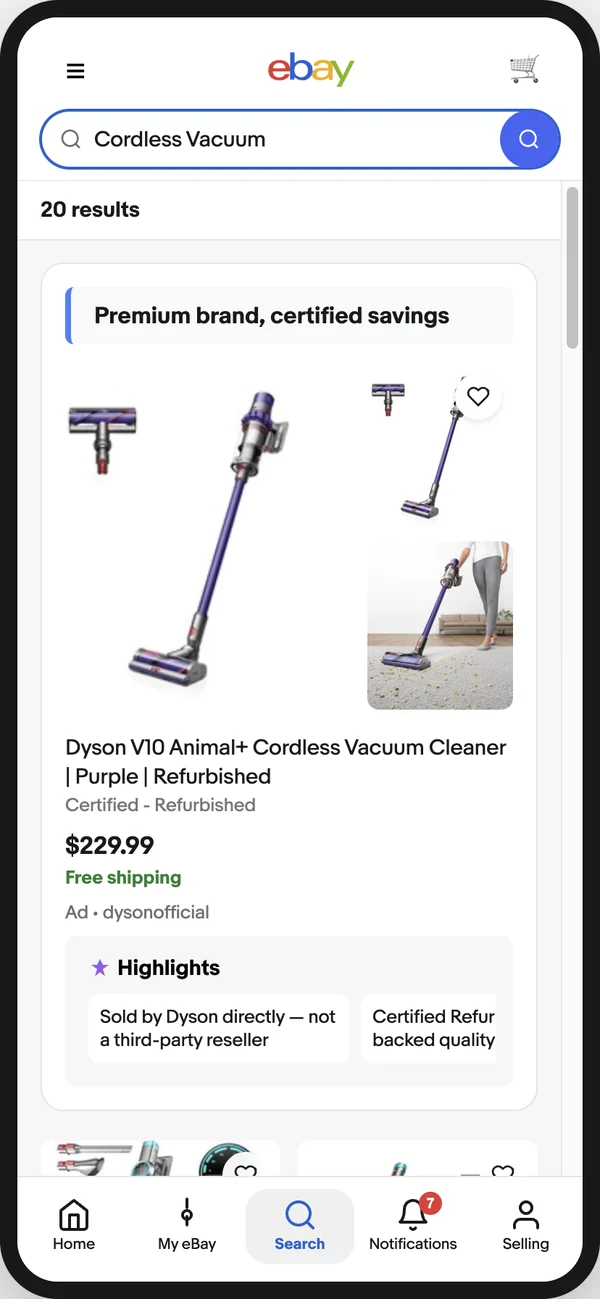
Choosing the item and writing the card happen in the same reasoning pass. The engine writes the card’s headline, the item’s unique value proposition (“Carrier-backed refurb, best price”), then two to four insights that prove it, built from the listing’s real data: who the seller is, how the price compares with the next comparable item, what the condition actually means.
The headline says why this item was chosen; the insights are the evidence. A buyer can see at a glance that it’s the right choice for their search, and buy with confidence instead of comparing a dozen listings. Writing evidence like that from live data takes a reasoning model; templates and classifiers can’t do it.
Safety first
A featured scam would do more harm than no feature. A hard filter on seller feedback runs before the model ever sees a candidate, and the engine is instructed to act as a skeptic, not a promoter: it rejects prices far below the going rate and favors established sellers.
Where it went
A working prototype on live search data, with candidates personalized from the shopper’s recent browsing. It won funding to build it for real.